
A pressure cooker is a widely used cookware item designed to prepare food using high-pressure steam. Many households and commercial kitchens prefer pressure cookers due to their convenience, sealed design, and ability to support multiple cooking tasks. Pressure cookers are commonly found in Indian kitchens as well as in various other parts of the world.
If you are planning to purchase a pressure cooker online, this post provides general information about pressure cookers, their usage, safety considerations, material types, and helpful FAQ-based insights. This assists users in making informed decisions based on their requirements and kitchen compatibility.
What is a Pressure Cooker?
A pressure cooker is a sealed cooking utensil that utilizes steam pressure to cook food. When heated, the liquid inside generates steam, increasing internal pressure and temperature. This supports quicker cooking of ingredients such as rice, lentils, grains, vegetables, and certain meat preparations.
How Does a Pressure Cooker Work? (General Explanation)
- The cooker contains liquid (such as water or broth) with ingredients.
- It is sealed with a lid containing valves for steam regulation.
- Heat produces steam, building internal pressure.
- Increased pressure raises the boiling point and cooking temperature.
- Steam valves regulate and release excess pressure when needed.
Types of Pressure Cookers (General Overview)
1. Outer Lid Pressure Cooker
- Lid rests outside the main pot body
- Common in aluminum and stainless steel
- Available in multiple capacities
2. Inner Lid Pressure Cooker
- Lid fits inside the rim of the cooker
- Often used for smaller capacities
3. Induction-Compatible Pressure Cooker
- Works on induction cooktops
- Usually stainless steel or induction base material
4. Electric Pressure Cooker
- Runs on electricity with digital controls
- Often supports multi-cooking modes
5. Microwave Pressure Cooker
- Designed for microwave use
- Made using microwave-safe materials
Material Types of Pressure Cookers
| Material | Description |
|---|---|
| Aluminum | Light-weight and commonly used for daily cooking |
| Stainless Steel | Durable and often induction-compatible; heavier than aluminum |
| Hard-Anodized | Enhanced coating for longevity and stain resistance |
| Electric Models | Contains stainless steel or non-stick inner pots with heating system |
General Safety and Maintenance Tips
- Check gasket, valves, and safety components periodically
- Follow the manufacturer’s operating instructions
- Do not exceed recommended ingredient levels
- Ensure proper venting of steam before opening
- Replace worn-out parts when necessary
- Allow pressure to release safely as per manual
General Cleaning & Care Tips
- Detach removable parts before washing
- Refer to dishwasher compatibility guidelines
- Clean valves and food residue properly
- Dry thoroughly before storage
Pressure Cooker FAQs
Can a pressure cooker be used on induction cooktops?
Some pressure cookers are designed with an induction-friendly base and can be used on induction cooktops. Stainless steel models and aluminum cookers with induction plates are generally compatible. Buyers should check product specifications for “induction compatible” before purchasing.
Can a pressure cooker be washed in a dishwasher?
Pressure cooker bodies may be dishwasher-safe depending on material and manufacturer guidelines. However, lids often contain valves, safety plugs, and gaskets that are better washed manually. Users should refer to the care instructions provided with their specific model.
Is it safe to use a pressure cooker for daily cooking?
Pressure cookers are commonly used for preparing daily meals such as rice, lentils, soups, and vegetable dishes. Users should follow the safety guidelines provided by the manufacturer, inspect components regularly, and ensure proper steam release to avoid mishandling.
Can a pressure cooker be used on gas, electric, and ceramic stoves?
Most stovetop pressure cookers can be used on gas and electric coil stoves. Compatibility with ceramic and glass stovetops depends on the base material and flatness. Users should verify compatibility in the product details or user guide.
How long does a pressure cooker last?
The lifespan of a pressure cooker varies based on usage, material, and maintenance. With proper care, stainless steel and hard-anodized models typically offer longer durability. Rubber gaskets, valves, and sealing rings may require periodic replacement.
List of Some Popular Pressure Cookers Available Online India:
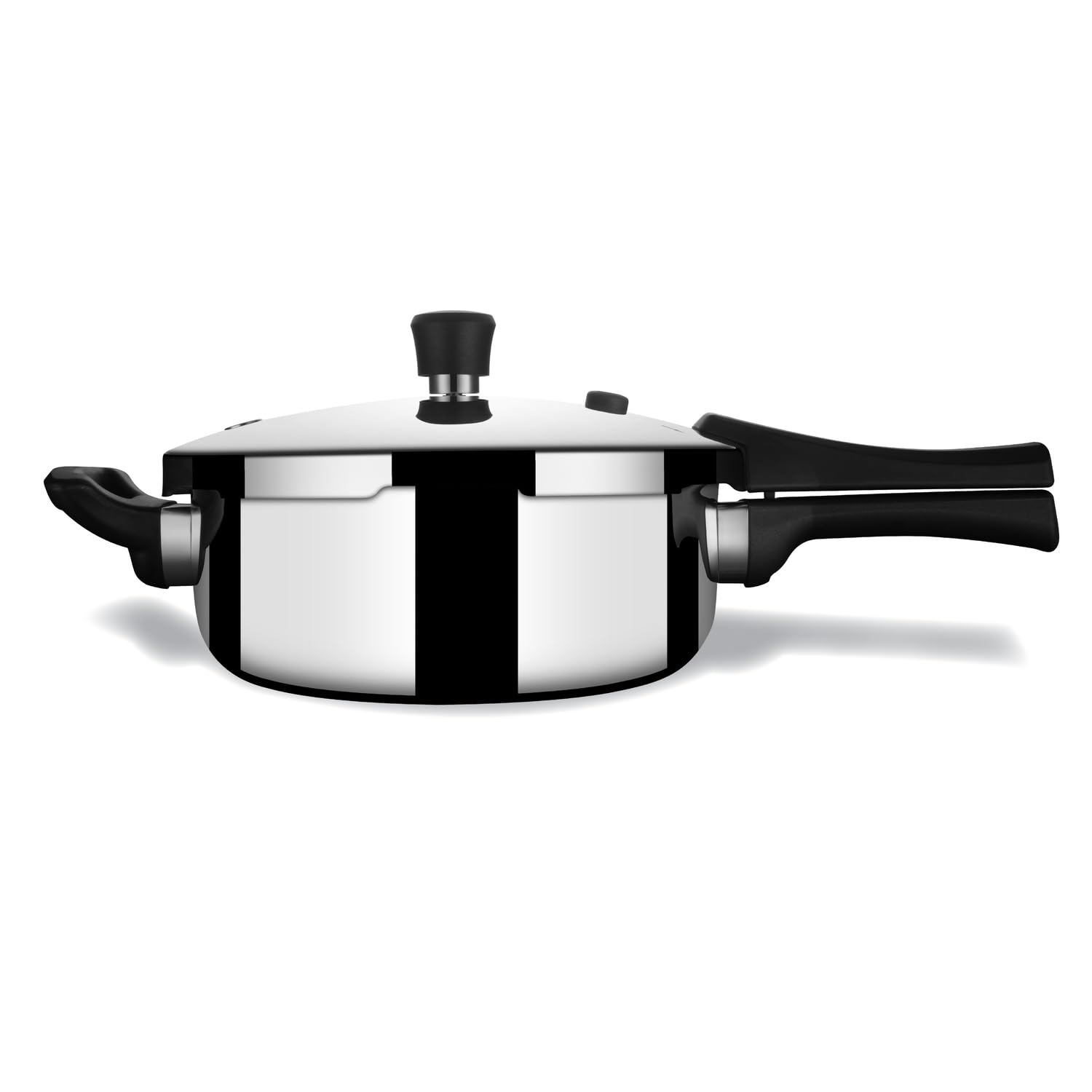
1. Stahl Xpress Triply Pressure Cooker, 3.5 L
3.5 litre triply pressure cooker compatible with induction and gas stoves, featuring durable construction and easy cooking.
View Product
2. Butterfly Curve Stainless Steel Pressure Cooker, 2 Litre
2 litre stainless steel pressure cooker with outer lid design, suitable for daily cooking on gas stoves.
View Product
3. Pigeon Favourite Aluminium Pressure Cooker, 3 Litre
3 litre non-induction aluminium pressure cooker with outer lid, ideal for quick and efficient cooking on gas stoves.
View Product
4. Prestige Deluxe Alpha Svachh Triply Pressure Cooker, 5 Litre
5 litre stainless steel pressure cooker with deep lid, triply base, and compatibility with gas and induction stoves. Designed for safe and efficient cooking.
View Product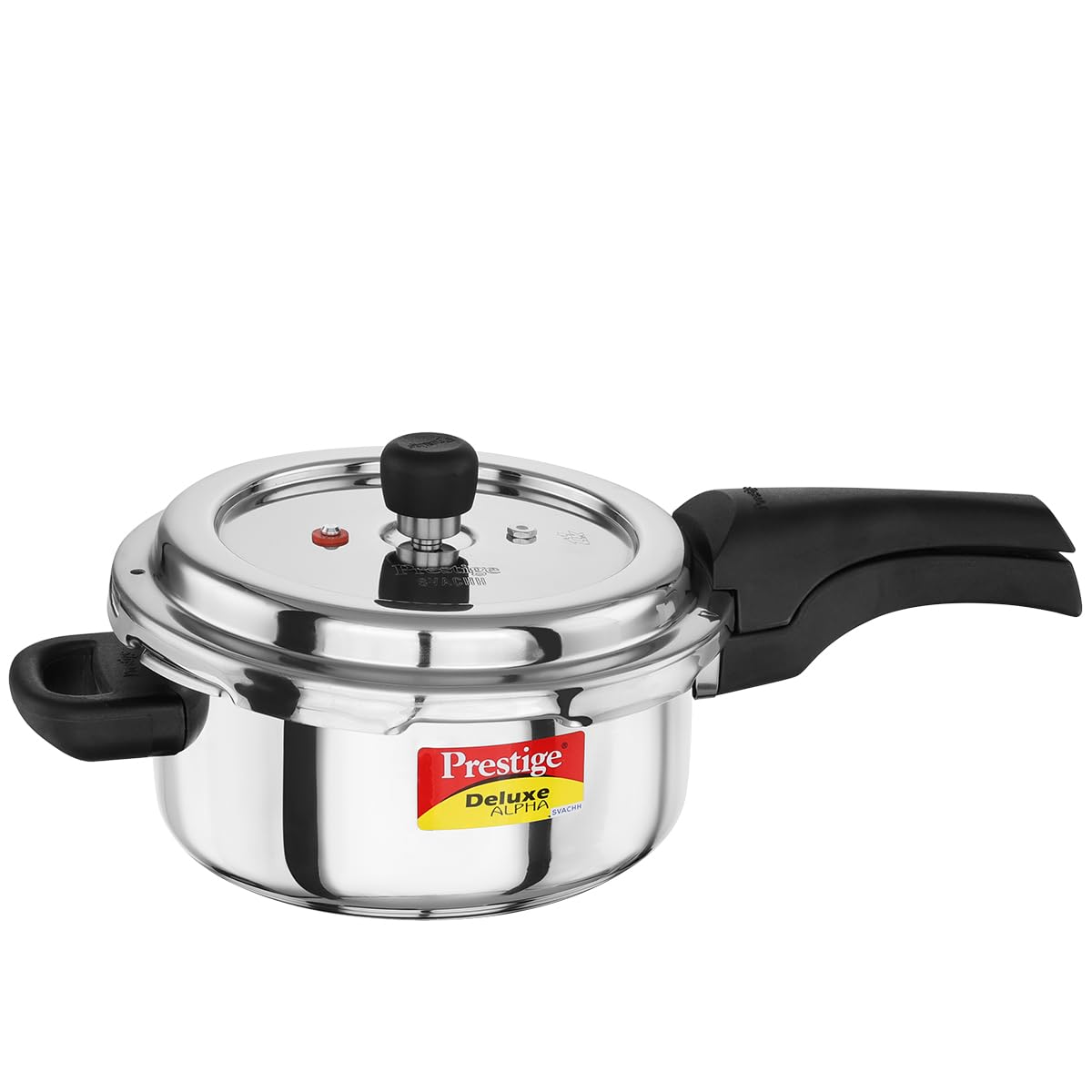
5. Prestige Deluxe Alpha Svachh Triply Pressure Cooker, 3 Litre
3 litre stainless steel pressure cooker with deep lid, triply base, and GRS system, suitable for gas and induction cooking.
View Product