
Electric kettles have become a crucial kitchen appliance for students, working professionals, and homemakers. From brewing tea and coffee to boiling water for noodles or baby food, the electric kettle is valued for its speed, convenience, and energy efficiency. But how does an electric kettle work internally? Is it safe for daily use? Can milk be boiled in it? And how do you clean an electric kettle properly without damaging it? This detailed guide explains everything.
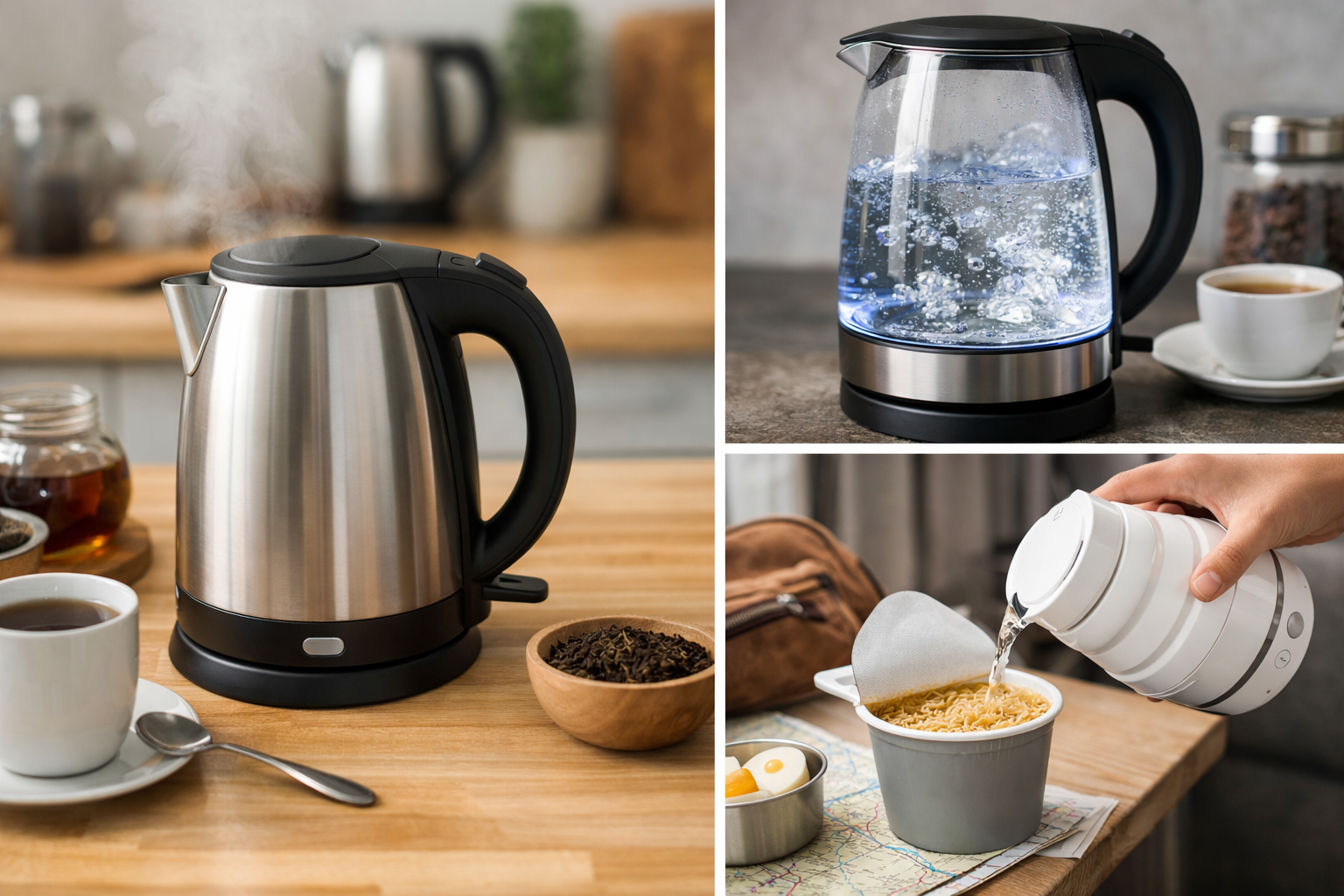
What Is an Electric Kettle?
An electric kettle is a small appliance designed to heat water using an electric heating element embedded in its base. Unlike traditional stovetop kettles, electric kettles plug into a wall socket and automatically shut off once the water reaches its boiling point. Electric kettles are widely used in kitchens, offices, hotels, and hostels due to their speed and reliability.
Key Electric Kettle Components:
- Heating coil or heating plate
- Thermostat or temperature sensor
- Auto shut-off mechanism
- Body material (stainless steel, plastic, borosilicate glass)
- Lid and spout
- Detachable power base
How Does an Electric Kettle Work?
The core principle behind electric kettle functionality is electrical resistance heating. When powered on, electricity flows through the internal heating element, generating heat due to resistance. This heat transfers directly to the base, raising the water temperature.
Working Process Breakdown:
- The kettle is filled with water and connected to a power source.
- The heating element converts electrical energy into heat energy.
- Water temperature rises to 100°C (boiling point).
- A thermostat detects boiling and triggers the auto shut-off.
- The kettle powers off to prevent overheating or dry boiling.
This mechanism makes electric kettles fast, energy-efficient, and safer than stovetop kettles.
Different Types of Electric Kettles
Electric kettles come in multiple variants based on material, heating technology, and use cases. Choosing the right type affects durability, heating performance, and flavor quality—especially for tea enthusiasts.
Common Electric Kettle Types:
- Plastic Body Kettles
- Stainless Steel Electric Kettles
- Glass Electric Kettles (Borosilicate)
- Temperature-Control Kettles
- Wireless / Cordless Electric Kettles
- Travel Electric Kettles
- Smart Electric Kettles (App-controlled)
Stainless steel and glass kettles are preferred for health-conscious users due to better heat retention and no plastic leaching risk.
What Are the Best Types of Electric Kettles?
For daily boiling of water for coffee, black tea, or cup noodles, stainless steel kettles are considered the best due to durability. For green tea, matcha, and pour-over coffee, temperature-controlled kettles provide precision. For visual appeal, borosilicate glass kettles are trending since they allow users to see the boiling process.
Best choice by usage:
- Health and durability: Stainless steel kettle
- Tea and brewing: Temperature-controlled kettle
- Aesthetic look: Glass kettle
- Travel: Compact foldable kettle
Is It Safe to Use an Electric Kettle Daily?
Yes, electric kettles are generally safe for daily use when made from BPA-free plastics or stainless steel. The thermostat and auto shut-off mechanisms prevent overheating and dry burn accidents. Stainless steel electric kettles are preferred for boiling water daily because they resist scaling, corrosion, and flavor contamination.
Safety Recommendations:
- Use BPA-free or steel kettles
- Avoid leaving boiled water stored for long hours
- Descale every 10–15 days if you have hard water
- Do not run the kettle dry
Can Milk Be Boiled in an Electric Kettle?
Directly boiling milk in most electric kettles is not recommended. Milk easily overflows, sticks to the heating coil, burns, and causes odor. It can also damage the auto shut-off sensor if it coats the thermostat.
Exceptions: Some multipurpose kettles with open coil-free bases and preset modes (e.g., “milk boil”) allow boiling milk safely.
Can You Wash an Electric Kettle?
You should not submerge an electric kettle base or its heating element in water. The outer surface and lid can be wiped with a damp cloth. The inside can be descaled using natural solutions.
How to Clean & Descale an Electric Kettle (Without Damage)
To remove scale, mineral deposits, or odor, follow these steps:
- Fill the kettle with 50% water + 50% white vinegar or lemon juice.
- Bring it to boil and let it sit for 15–20 minutes.
- Discard the mixture and rinse thoroughly.
- Boil plain water once to remove residual taste.
Tip: For hard water areas, perform descaling every 10–15 days to enhance kettle lifespan.
Benefits of Using an Electric Kettle
- Fast boiling time (2–4 minutes)
- Energy-efficient heating
- Portable and convenient
- Auto shut-off for safety
- Perfect for tea, coffee, noodles, eggs, etc.
- Temperature control for brewing enthusiasts
Common Uses of Electric Kettles
- Boiling water for beverages
- Preparing instant noodles or soups
- Steeping herbal tea
- Making hot chocolate
- Preparing baby formula (after cooling)
- Brewing pour-over coffee
- Boiling eggs (in certain models)
Take away:
An electric kettle is a functional, fast, and energy-efficient appliance suitable for modern kitchens and travel usage. While it’s safe for daily boiling of water, users should avoid boiling milk unless the kettle is specifically designed for it. With proper descaling and cleaning techniques, an electric kettle can last for years without performance issues.
Tags: electric kettle, how electric kettle works, kettle cleaning guide, boil milk in kettle, stainless steel electric kettle, glass electric kettle, kettle descaling, electric kettle safety, best electric kettles