
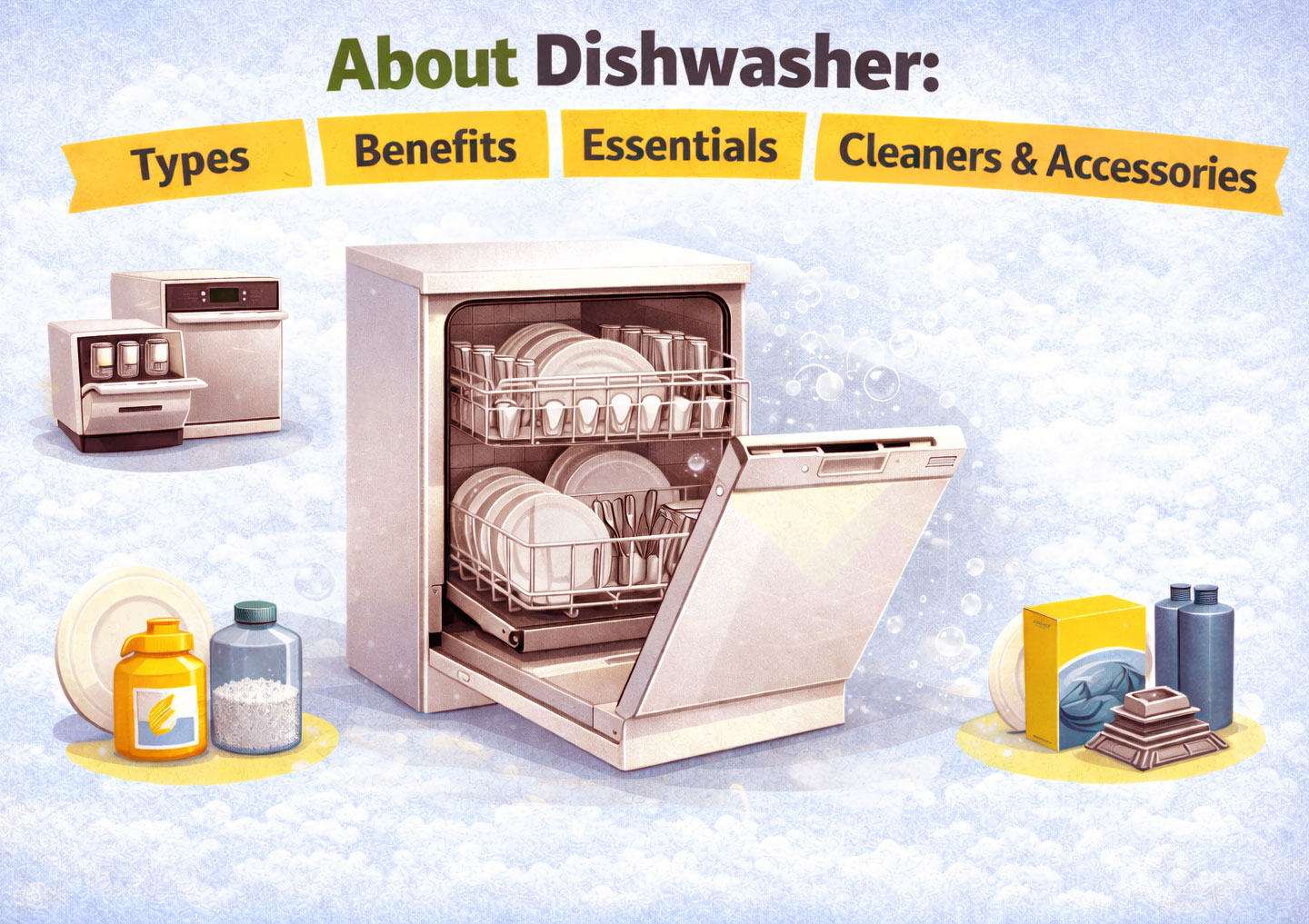
What Is a Dishwasher?
In many modern kitchens, a dishwasher has become an essential appliance for handling daily cleaning tasks. A dishwasher is an electrical kitchen appliance designed to clean utensils, cutlery, cookware, and dishware automatically, reducing the need for manual scrubbing.
It works by spraying hot water mixed with detergent at high pressure, helping to remove grease, stains, and stuck-on food particles. With multiple wash programs, temperature settings, and energy-saving modes, dishwashers offer a convenient and hygienic alternative to traditional hand washing.
How Does a Dishwasher Work?
Inside the appliance, rotating spray arms distribute hot water mixed with dishwasher detergent across all utensils placed inside. The combination of water pressure and heat helps loosen stubborn food residue.
After the main wash cycle, the dishwasher rinses away detergent and leftover particles. A final drying phase, which may use heat or airflow, ensures the utensils are dry and ready to use once the cycle is complete.
Types of Dishwashers
1. Countertop Dishwasher
Countertop dishwashers are compact units designed for small kitchens, apartments, or households with limited space. They are easy to install and are best suited for light to moderate dishwashing needs.
2. Freestanding Dishwasher
Freestanding dishwashers are among the most commonly used types. They can be placed anywhere with access to water and electricity and usually offer a larger capacity compared to countertop models.
3. Built-In Dishwasher
Built-in dishwashers are installed within kitchen cabinetry, providing a seamless and modern appearance. These models are ideal for large families or homes with frequent cooking and heavy daily usage.
4. Slimline Dishwasher
Slimline dishwashers are narrower than standard units and are designed specifically for compact kitchens. Despite their smaller width, they still provide efficient cleaning for everyday needs.
5. Portable Dishwasher
Portable dishwashers are movable appliances that do not require permanent installation. They are a practical option for rental homes or temporary kitchen setups where flexibility is important.
Benefits of Using a Dishwasher
- Using a dishwasher offers several practical advantages in everyday life:
- Saves time and reduces physical effort
- Uses less water compared to manual dishwashing
- Provides hygienic cleaning with high-temperature water
- Energy-efficient with modern eco-friendly modes
- Effectively removes grease and bacteria
- Reduces the chances of utensil breakage
Disadvantages of a Dishwasher
- While dishwashers are highly convenient, there are a few limitations to consider:
- Initial purchase and installation costs can be high
- Requires regular cleaning and maintenance
- Needs special dishwasher detergents and cleaners
- Not all utensils and cookware are dishwasher-safe
Dishwasher Essentials You Need
- To ensure proper performance, a dishwasher requires certain essentials:
- Dishwasher detergent (available as powder, liquid, or tablets)
- Rinse aid for streak-free and spot-free drying
- Dishwasher salt to soften hard water
- Dishwasher-safe utensils and cookware
- Proper racks and cutlery baskets for organized loading
Dishwasher Cleaners and Maintenance Products
Regular maintenance helps improve efficiency and extends the lifespan of the appliance. Common dishwasher cleaning and maintenance products include:
- Dishwasher cleaning tablets
- Liquid dishwasher cleaners
- Descaling solutions for mineral buildup
- Odor removers and fresheners
- Filter-cleaning solutions
Dishwasher Accessories
Various accessories can improve convenience and functionality:
- Cutlery baskets
- Extra utensil racks
- Glass holders and cup shelves
- Water inlet and outlet pipes
- Protective dishwasher covers
Things to Remember While Using a Dishwasher
- Keeping a few important points in mind can help ensure better performance and safety:
- Always use utensils labeled as dishwasher-safe
- Avoid overloading the dishwasher
- Place utensils properly to prevent blocking spray arms
- Use detergent only in the recommended quantity
- Clean the filter regularly to avoid clogging
- Select wash cycles based on utensil type and dirt level
- Allow utensils to cool before unloading
Summary
Dishwashers are efficient, hygienic, and time-saving kitchen appliances that make daily cleaning easier. By choosing the right type of dishwasher and using suitable detergents, accessories, and maintenance practices, users can enjoy reliable performance and long-term durability.