
A chopper is a compact and handy kitchen accessory designed to simplify the preparation of ingredients for everyday cooking. It helps in breaking down vegetables, fruits, herbs, nuts, and other food items into smaller pieces with minimal time, effort, and mess. Choppers are widely used in modern kitchens due to their convenience, portability, and ease of use.
Why Choppers Are Popular in Kitchens
Daily meal preparation often involves chopping multiple ingredients such as onions, tomatoes, chilies, garlic, ginger, and more. Manual chopping can slow down the cooking process and may also cause discomfort (for example, eye irritation when cutting onions). A chopper reduces this effort and speeds up ingredient preparation, making it beneficial for individuals who cook frequently or prefer fresh chopped ingredients.
Types of Kitchen Choppers (General Overview)
1. String / Pull Chopper
- Operates by pulling a string to rotate blades
- Requires no electricity
- Suitable for vegetables, nuts, herbs, and soft items
- Compact and travel-friendly
Best Popular String / Pull Chopper Vegetable Choppers Available Online (Selected by Us)

1. Wonderchef Classic String Vegetable Chopper & Whipper, 300 ml
Manual pull-cord chopper with stainless steel blades for quick chopping and basic whisking tasks in the kitchen.
View Product
2. Butterfly Premium Manual Vegetable Chopper, 900 ml
Large-capacity manual chopper designed for cutting vegetables and fruits efficiently for everyday meal prep.
View Product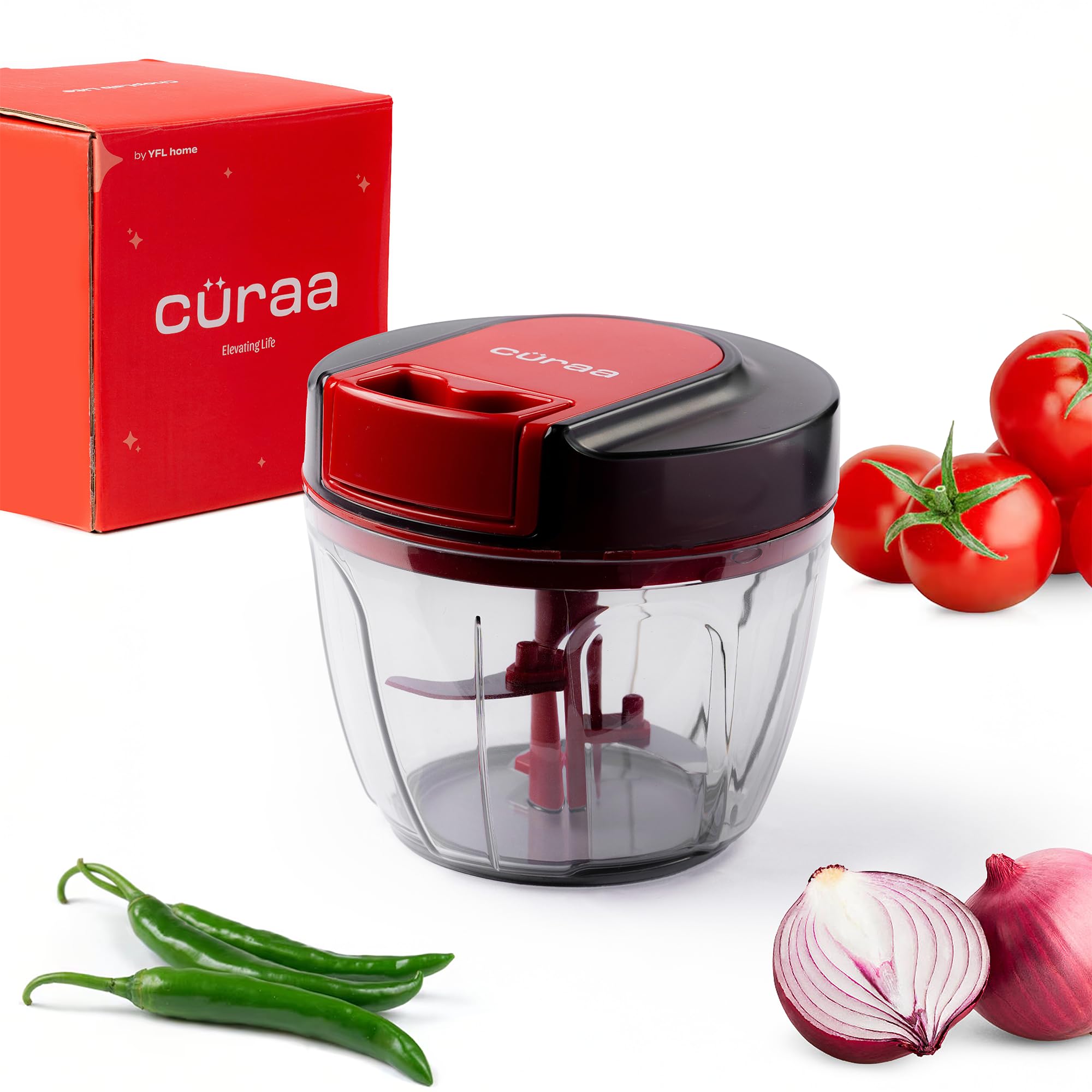
3. Cüraa ChopLab Lite Manual Vegetable Chopper, 650 ml
Portable manual chopper with stainless steel blades, suitable for chopping vegetables, herbs, nuts, and aromatics.
View Product
4. Pigeon Handy Compact Manual Chopper, 400 ml (Green)
Compact kitchen chopper with pull mechanism and stainless steel blades for basic fruit and vegetable chopping.
View Product
5. E-COSMOS Hand-Press Manual Food Chopper, 900 ml
Manual food chopper with a press mechanism and multiple blades suitable for cutting vegetables and salad ingredients.
View Product
6. GANESH Manual Hand-Press Push Chopper, 725 ml
Hand-press chopper made from plastic with stainless steel blades, designed for chopping fruits and vegetables with ease.
View Product
7. Cello Magic Manual Vegetable Slicer & Chopper, 450 ml
Multi-utility manual chopper with stainless steel blades for chopping vegetables and fruits, suitable for compact kitchens.
View Product2. Push / Hand-Press Chopper
- Blade rotates when the top surface is pressed
- Useful for quick chopping in small quantities
3. Electric Chopper
- Powered by electricity
- Achieves faster and more consistent chopping
- Good for large quantities
General Components of a Pull-String (Manual) Chopper
| Component | Description |
|---|---|
| Blade Unit | Stainless steel rotating blades available in multiple layouts |
| Container Bowl | Food-grade plastic or glass container for holding ingredients |
| Pull Mechanism | String or cord that drives blade rotation |
| Lid | Houses the internal gear mechanism and helps in securing the bowl |
| Base | Flat surface to ensure stability during operation |
Key Features to Consider Before Choosing a Chopper
- Blade Count & Quality
- Container Capacity
- Material Type (Plastic, Glass, Stainless Steel)
- Ease of Cleaning
- Portability
- Safety Features
- Grip and Stability
Using a Manual Pull-String Chopper (General Steps)
- Open the lid and insert the blade unit inside the container.
- Add ingredients around the blade without overfilling.
- Secure the lid properly.
- Place the chopper on a flat and stable surface.
- Hold the body and pull the string in controlled manner.
- Repeat pulling for finer chopping results.
Blade Variations Found in Choppers
| Blade Count | Typical Output |
|---|---|
| 3 Blades | Basic and rough chopping |
| 4 Blades | Medium to fine chopping |
| 5 Blades | Faster and finer processing |
Common Uses of a Kitchen Chopper
Vegetables & Herbs
- Onions
- Tomatoes
- Green Chilies
- Coriander and Mint Leaves
- Ginger and Garlic
Dry Ingredients
- Nuts
- Seeds
- Some whole spices (depending on hardness)
Soft Items
- Cheese
- Boiled Vegetables
- Leafy Greens
Note: Performance may vary depending on the type of chopper and blade material.
Basic Workflow (Flowchart Style)
Raw Ingredients
        ↓
Cut into medium pieces
        ↓
Place inside chopper bowl
        ↓
Close lid and stabilize
        ↓
Pull / Press / Switch (based on chopper type)
        ↓
Chopped Output Ready
Benefits of Using a Chopper (General)
- Reduces preparation time
- Minimizes manual effort
- Keeps the kitchen counter cleaner
- Portable and easy to store
- Provides consistent cuts
- Useful for everyday cooking needs
Safety & Maintenance Tips
- Keep blades out of children’s reach
- Avoid overfilling the container
- Do not apply excessive force on the lid or cord
- Clean parts after every use
- Check for cracks or damaged parts
- Store blade separately if possible
Cleaning & Care
- Detach blade before washing
- Use mild liquid detergent and water
- Check if parts are dishwasher-safe before using dishwasher
- Dry all components thoroughly to avoid odor
Summary
A kitchen chopper is a useful tool that simplifies ingredient preparation by making chopping faster, cleaner, and more efficient. With different types and blade configurations available, households can choose choppers based on their cooking style and usage frequency. Manual choppers offer portability and convenience, while electric models provide speed and consistent results for larger quantities.